Technology Primers
Learn about various high-performance technologies in buildings.
These Technology Primers are intended to introduce an array of audiences to high-performance technology in buildings. These solutions can help cut energy costs and improve comfort in your building.
The Tech Primers are meant to serve as building blocks to understand how different high performance technology works and its path to implementation.
The Tech Primers were developed in partnership with the Building Energy Exchange.
Explore:
HVAC Tech Primers
Explore technologies that help you optimize HVAC systems or identify high-performing HVAC systems for your building. You can also find incentives from your local utility to support these improvements.
Navigation:
Air to Water
Heat Pumps
Air to water heat pumps (AWHPs) are a deep energy retrofit option to electrify a building’s domestic hot water system.
By either replacing or supplementing a traditional gas, oil, or steam system, AWHPs can significantly reduce carbon emissions and save energy.
Chilled Water Plant Optimization
Cooling with chilled water is a centralized air conditioning method common in large buildings.
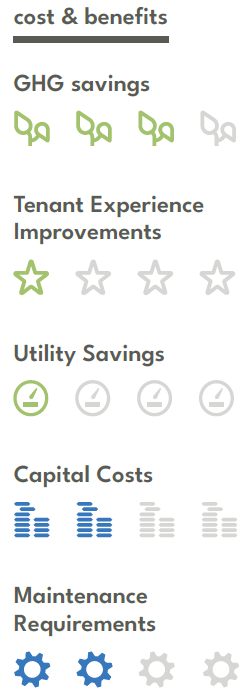
Chilled water plant optimization can reduce greenhouse gas emissions, extends equipment life, reduces utility costs, and provides high turn down and heat recovery.
Dedicated Outdoor Air Systems
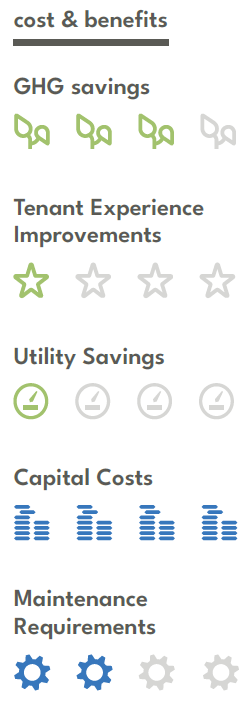
Dedicated Outdoor Air Systems (DOAS) and Energy Recovery Ventilators (ERVs) provide controlled and conditioned ventilation that improves indoor air quality and occupant health, while reducing greenhouse gas emissions and saving energy.
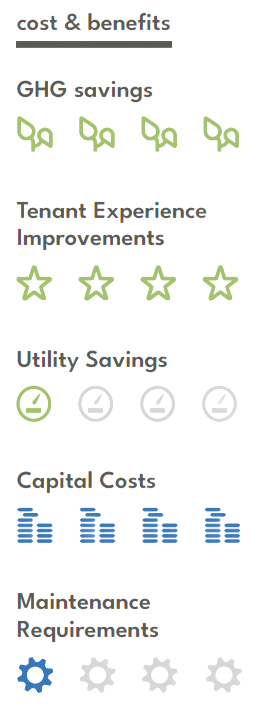
Energy Recovery Ventilators (ERVs)
An enhanced mechanical ventilation system with an Energy Recovery Ventilator (ERV) provides controlled and conditioned ventilation that improves indoor air quality and occupant health, while reducing greenhouse gas emissions and saving energy.
Learn more about how enhanced ventilation and ERVs can improve your air quality while optimizing energy performance.
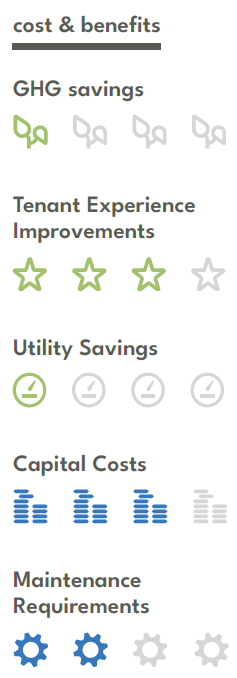
One-Pipe Steam Optimization
Although one-pipe steam is commonly associated with overheating and energy waste, optimizing these systems with a few high-efficiency upgrades can reduce energy bills and improve resident comfort.
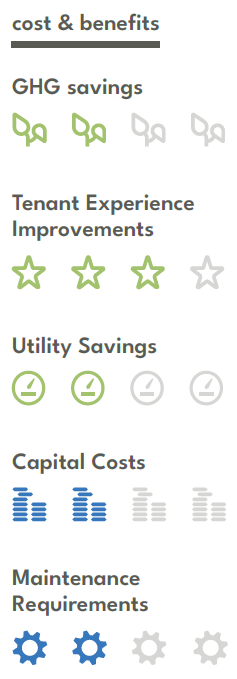
Two-Pipe Steam Optimization
Although two-pipe steam is commonly associated with overheating and energy waste, optimizing these systems with a few high-efficiency upgrades can reduce energy bills and improve resident comfort.
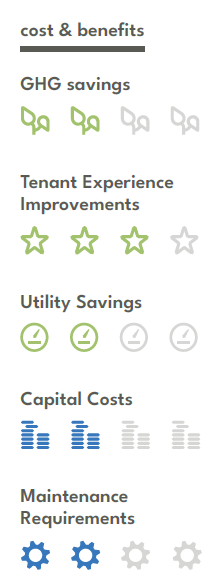
Hydronic Heat Upgrade
Hydronic heating systems are common in large multifamily, hotel, and commercial buildings. A targeted optimization of boiler equipment, distribution pumps, and controls can reduce energy use, lower utility costs, and deliver consistent, comfortable heat throughout the building.
Variable Refrigerant Flow Systems
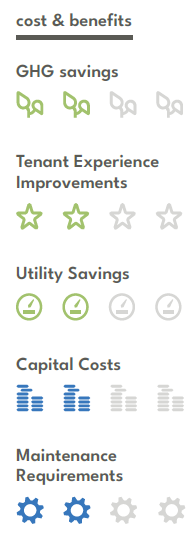
Variable Refrigerant Flow (VRF) is an efficient heating and cooling technology that saves energy and reduces greenhouse gas emissions while greatly improving resident comfort. VRF systems offer multifamily buildings a path to electrification.
Packaged Terminal Heat
Pumps (PTHPs)
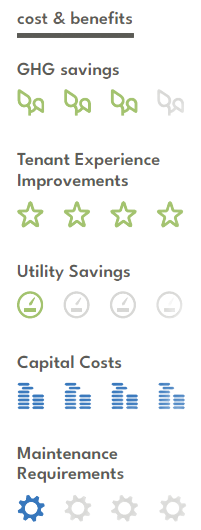
Packaged Terminal Heat Pumps (PTHPs) are a compact and efficient heating and cooling technology that saves energy and reduces greenhouse gas emissions. PTHPs offer multifamily buildings a path to electrification.
Variable Refrigerant Flow Systems
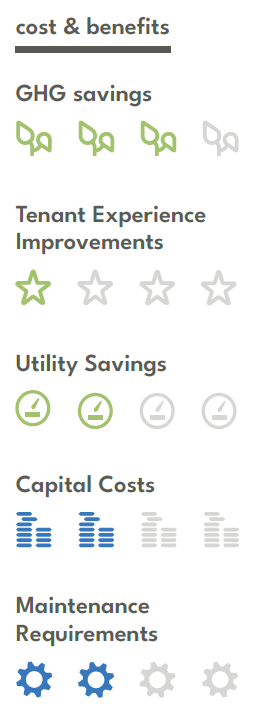
Mini-split systems are an efficient heating and cooling technology that saves energy and reduces greenhouse gas emissions while greatly improving resident comfort. Mini-split systems offer multifamily buildings a path to electrification.
Incentives from Utilities
Weatherization Tech Primers
You can't manage your building's performance unless you measure it. Benchmark key building data to track your building's performance over time.
Navigation:
Air Sealing at Room Air Conditioners
Window, sleeve, and PTAC units all create gaps in the building envelope that let in drafts, noise, moisture, and pests — even when the AC isn't running. Sealing these units and establishing a simple seasonal maintenance policy is one of the lowest-cost improvements available, with direct benefits to indoor air quality, energy costs, and resident comfort.
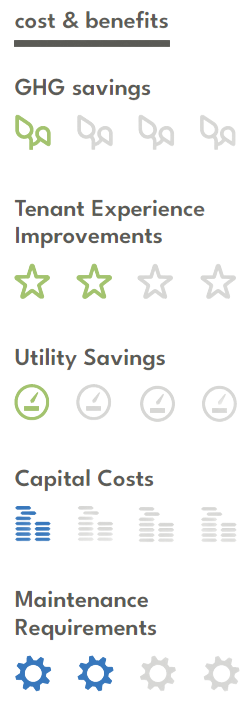
High Performance Windows
As part of a building’s envelope, windows play an important role in moderating indoor temperature.
Upgrading to high performance windows improves comfort and lowers operating costs by reducing demand on the building’s heating and cooling systems.
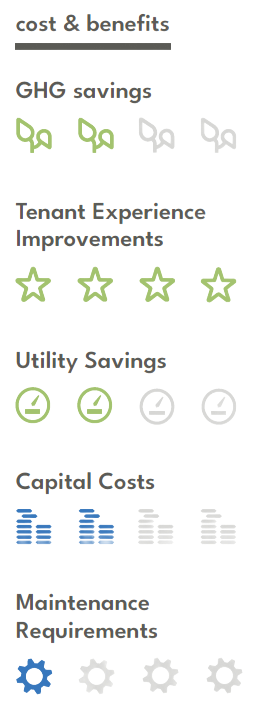
Wall Insulation
Insulation, in tandem with other enclosure elements, plays a critical role in moderating indoor comfort.
Optimizing the type, amount, and location of insulation can hugely improve comfort and lower utility bills.
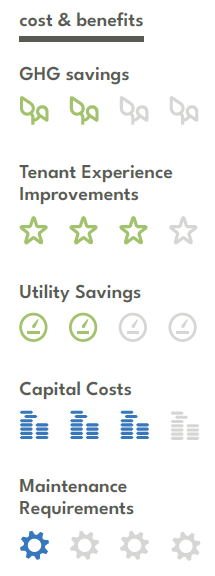
Incentives from Utilities
Lighting and Energy Use Tech Primers
Lighting and appliance upgrades can be a low-cost, high-impact energy saving strategy. Explore ways to improve energy efficiency and find the accompanying incentives and rebates from utilities.
Navigation:
LED Lighting Retrofits
LED lighting upgrades are a low-cost, high impact opportunity to improve the performance of a building's lighting system, reduce energy use, enhance occupant comfort, and save money.
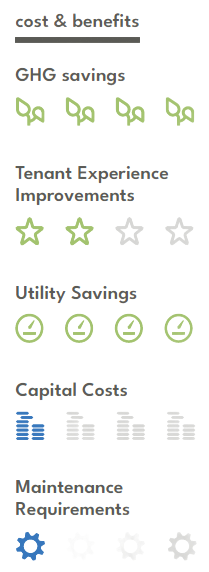
Plug Loads and Tenant Energy Use Reduction
Energy use in tenant spaces can be significantly reduced by adopting simple user engagement strategies, upgrading to efficient appliances and equipment, sub-metering tenant spaces, and installing smart lighting controls.